Introduction
Some children are naturally curious and ask endless questions. Others prefer to observe quietly before participating. Some thrive when leading group discussions, while others show their strengths through reflection and independent thinking.
This is where the International Baccalaureate (IB) learner profile comes in. It is built on the belief that every child brings something unique to the classroom. Rather than focusing on a single definition of success, it encourages students to develop a range of qualities that help them grow as learners, friends, leaders, and members of their community.
In this article, we explore what the IB learner profile is, why this framework matters, and how it supports your child’s growth throughout their educational journey.
Key Takeaways
- The IB Learner Profile is a set of attributes that helps shape how students learn, think, interact with others, and approach challenges.
- It recognises that every child grows differently, whether they are naturally curious, quietly reflective, confident in groups, or still finding their voice.
- The ten learner profile attributes support both academic learning and personal growth, helping students build qualities such as curiosity, empathy, resilience, integrity, and open-mindedness.
- At ISS International School, the learner profile develops across the IB continuum, giving students age-appropriate support as they grow.
- Beyond the classroom, ISS helps students apply these values through extracurricular activities, service learning, and close partnerships with families.
What Is the IB Learner Profile?
The IB learner profile is a key part of the International Baccalaureate continuum and its approach to holistic education. It is a set of ten attributes designed to help students grow into curious, confident, caring, and global individuals.
While academic learning remains important, the IB learner profile focuses on developing the qualities that support lifelong learning, meaningful relationships, and personal growth.
The 10 Learner Profile Attributes
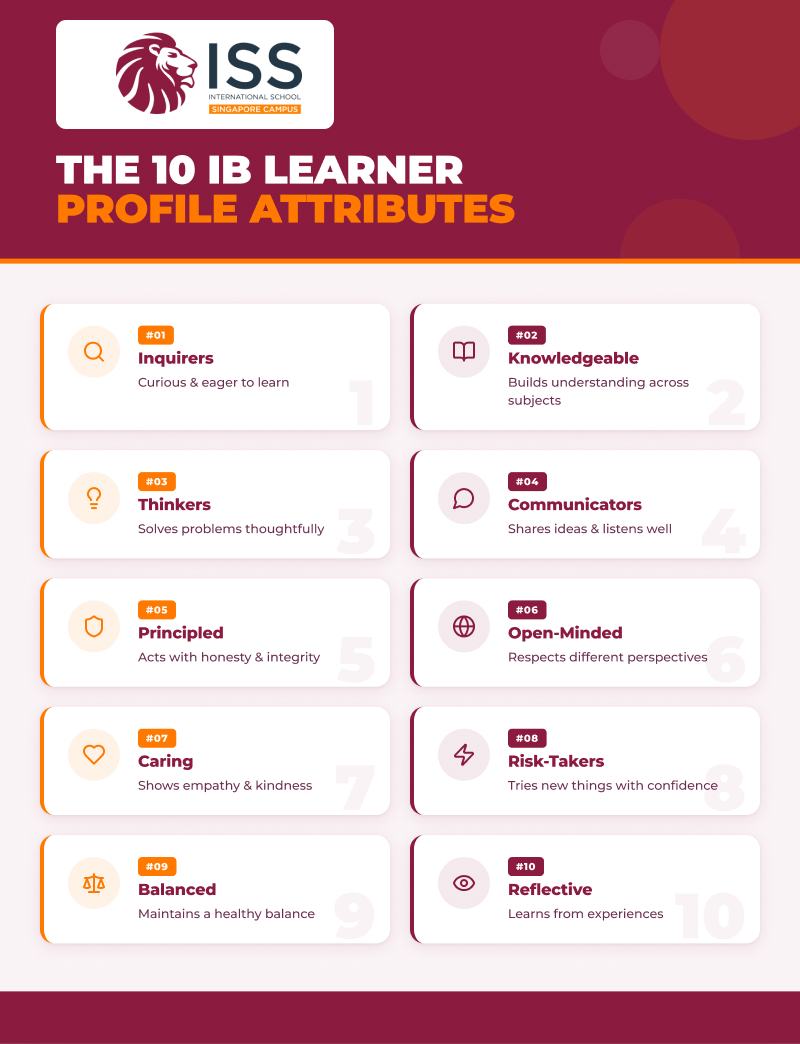
#1: Inquirers
A student learning about space might borrow books from the library, watch educational videos at home, or ask questions about how astronauts live and work in space. These are examples of an inquirer in action.
Inquirers are naturally curious learners who enjoy asking questions and exploring new ideas. Rather than waiting for answers to be given to them, they actively seek out information and look for opportunities to learn more. Through this process, children develop confidence, independence, and a genuine love of learning that can stay with them throughout life.
#2: Knowledgeable
Knowledgeable learners are able to build understanding across a wide range of subjects and experiences, focusing not only on learning facts but also on understanding how ideas relate to the world around them. For example, a child studying ecosystems may begin connecting classroom discussions to recycling, conservation, or environmental issues they encounter in everyday life.
As a result, children are better able to apply their knowledge in different contexts and situations.
#3: Thinkers
Imagine a student working on a group project who suggests several approaches, weighs the advantages and disadvantages of each, and helps the team decide on the most effective solution. This demonstrates the qualities of a thinker.
Thinkers use creative and critical thinking skills to solve problems, analyse situations, and make informed decisions. By considering different perspectives and evaluating information carefully, they become more confident and independent when facing challenges.
#4: Communicators
Communicators express themselves confidently while also respecting and valuing the contributions of others. During a classroom discussion, a student may explain their ideas clearly, listen carefully to classmates’ opinions, and adapt their explanation to ensure everyone understands their point of view.
Whether through speaking, writing, visual presentations, or collaboration, they learn to share ideas effectively, build relationships, and contribute meaningfully to group learning.
#5: Principled
Principled learners strive to act with honesty, integrity, and fairness in their everyday actions. They understand the importance of taking responsibility for their choices and making ethical decisions, even when doing so may be difficult. Developing this attribute helps children build trust, accountability, and respect for others.
#6: Open-Minded
In a diverse classroom, a student will learn to listen attentively as classmates share traditions from their home countries and ask thoughtful questions to better understand their experiences. This willingness to learn from others is a key characteristic of open-minded learners. They appreciate their own backgrounds while remaining receptive to different perspectives, cultures, and beliefs.
By approaching differences with curiosity and respect, children develop empathy and cultural awareness that support them in an increasingly interconnected world.
#7: Caring
A student who notices a classmate struggling with a task and offers assistance, or who volunteers enthusiastically in a school initiative supporting a local cause, is demonstrating care for others. Caring learners show empathy, compassion, and concern for the well-being of those around them.
They recognise that their actions can make a positive difference and actively look for opportunities to help and support others. This contributes to a strong sense of community and belonging.
#8: Risk-Takers
Risk-takers are willing to step outside their comfort zones and embrace new challenges. This may include volunteering to perform in front of an audience for the first time, join a new activity, or attempt a challenging project even when they are unsure of the outcome. They understand that learning often involves uncertainty and that mistakes can be valuable opportunities for growth.
By developing courage and resilience, children become more willing to try new experiences and persevere through difficulties.
#9: Balanced
Balanced learners recognise the importance of looking after their physical, emotional, and mental well-being. They understand that learning is most effective when there is a healthy balance between academics, personal interests, relationships, rest, and recreation.
Developing this awareness helps children manage their responsibilities while maintaining a healthy lifestyle. For example, a student may balance school assignments with sports, creative hobbies, family time, and opportunities to relax and recharge.
#10: Reflective
After receiving feedback on a piece of work, a reflective learner will take the time to consider what they did well, identify ways to improve, and apply those lessons to their next assignment. This process of thoughtful self-evaluation allows them to become more self-aware and take greater ownership of their learning and development.
Why the IB Learner Profile is Important
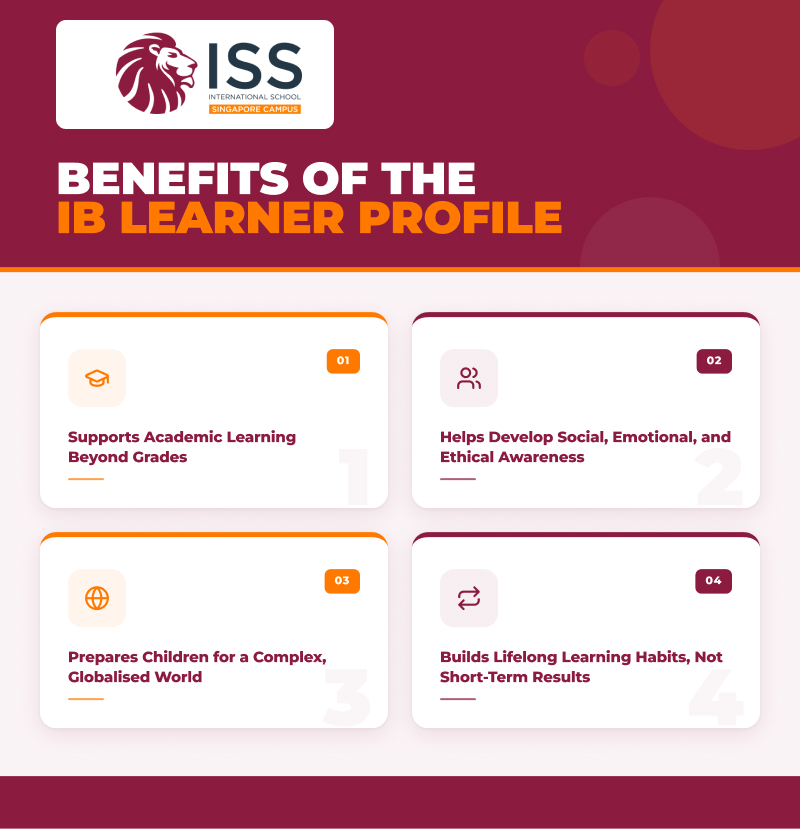
1. Supports Academic Learning Beyond Grades
When parents think about learning, grades are often one of the most visible indicators of progress. However, the way a child approaches learning can be just as important. The IB learner profile encourages students to be curious, think critically, and reflect on their experiences.
Instead of simply memorising information for a test, children learn to ask questions, explore ideas more deeply, and take an active role in their own learning. Over time, this can help them become more confident and engaged learners.
2. Helps Develop Social, Emotional, and Ethical Awareness
School is also where children learn how to navigate relationships, understand different perspectives, and make responsible decisions. The IB learner profile strongly emphasises on qualities such as caring, principled action, and open-mindedness, helping students develop empathy, emotional awareness, and respect for others.
These attributes can support healthy friendships, strengthen resilience when facing challenges, and encourage children to consider the impact of their actions on those around them.
3. Prepares Children for a Complex, Globalised World
The world children are growing up in today is increasingly interconnected. They are likely to study, work, and interact with people from a wide range of cultures and backgrounds throughout their lives. The IB learner profile encourages students to communicate effectively, appreciate different viewpoints, and approach new situations with an open mind. These experiences help children develop the confidence and adaptability needed to navigate a changing world.
4. Builds Lifelong Learning Habits, Not Short-Term Results
Many of the qualities encouraged through the IB learner profile continue to benefit children long after they leave school. By learning to reflect on their experiences, maintain balance in their lives, and step outside their comfort zones, students develop habits that support lifelong growth.
Rather than focusing only on short-term outcomes, this student-centered learning approach helps them become more resilient, adaptable, and self-directed over time.
How the IB Learner Profile Evolves as Children Grow
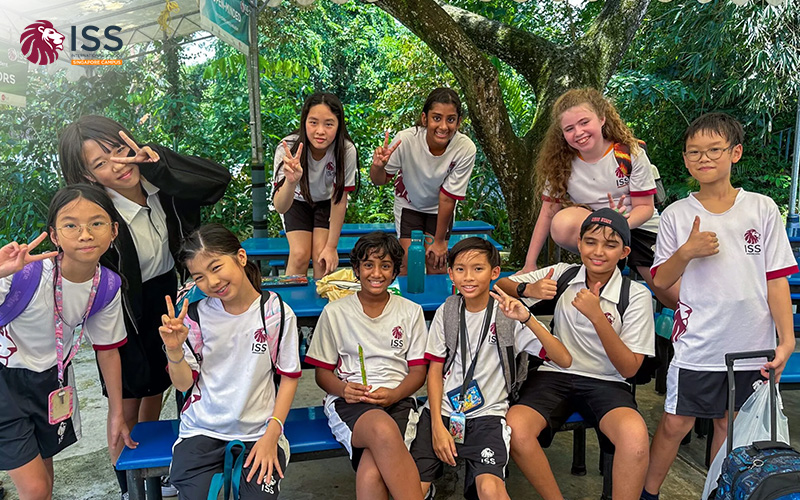
IB Primary Years Programme (PYP): Laying the Foundations
The IB PYP supports children from ages 4 to 12, covering the early and primary years of learning. At this stage, the curriculum strongly focuses on inquiry-based learning while also nurturing the IB learner profile.
Children are encouraged to share their ideas, listen to others, and develop caring relationships within the school community. With close guidance from teachers, they begin to see themselves as capable learners who can explore the world around them with curiosity and confidence.
IB Middle Years Programme (MYP): Strengthening Skills & Independence
As students move into the IB MYP, they begin applying the IB learner profile attributes with greater independence. At this stage, learning becomes more complex. The rigorous, well-rounded curriculum requires students to think critically, collaborate with others, and take increasing responsibility for managing their work.
Through projects, discussions, and interdisciplinary learning experiences, students strengthen their ability to evaluate different perspectives, make informed decisions, and reflect on their own progress. This helps them develop confidence while preparing for greater academic and personal responsibility.
IB Diploma Programme (DP): Preparing for Life Beyond School
In the IBDP, the learner profile becomes deeply embedded in both academic and real-world learning experiences. Students are challenged to think independently, manage demanding workloads, and engage with complex issues from multiple perspectives.
At the same time, they continue developing resilience, ethical judgement, self-awareness, and a sense of responsibility towards others. By the time students complete the programme, the learner profile serves as a foundation that supports them as they transition into higher education, future careers, and life beyond school.
How the IB Learner Profile Comes to Life at ISS International School
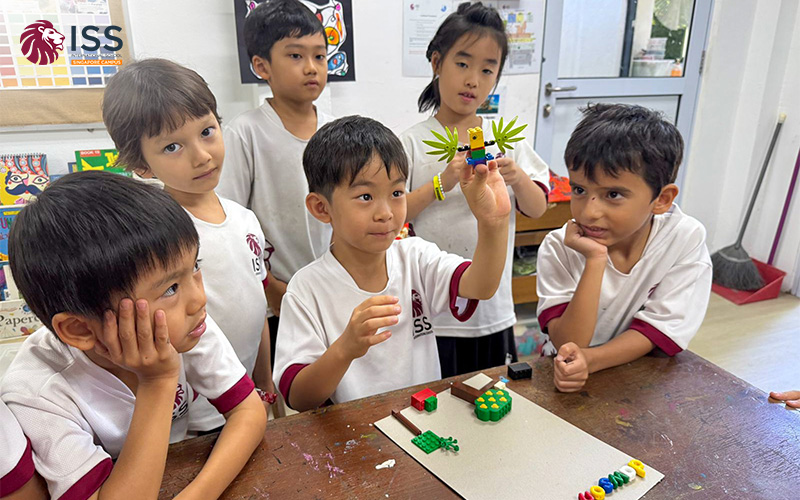
At ISS International School, we weave the IB learner profile into everyday school life. It shapes how teachers guide learning, how students work with one another, and how the wider school community supports each child’s growth.
1. Learning Within a Supportive School Community
At ISS, learning takes place within a close-knit community shaped by our Kampong Spirit. By fostering a more welcoming and culturally inclusive learning environment, we help students feel more supported and comfortably in taking part in school life
This sense of belonging, in turn, plays a crucial role in helping children develop key learner attributes and skills. Students learn to work with others, respect differences, take responsibility for their actions, and contribute positively to the people around them.
2. Inquiry and Global Perspectives in the Classroom
The learner profile also comes through in the way students explore ideas in class. Driven by an inquiry-based learning approach, our teachers encourage students to ask questions, consider different viewpoints, and make connections between what they learn and the world around them.
Lessons often bring together global education and perspectives with local relevance, helping students stay curious while also understanding their place in a wider community. For example, a discussion on environmental sustainability may begin with global issues such as climate change or conservation, before guiding students to think about everyday choices in Singapore, from recycling habits to how communities use shared spaces.
Through this approach, we help students practise open-mindedness, critical thinking, and reflection in meaningful ways.
3. Teachers Who Model Learner Profile Values
Children often learn as much from what adults do as from what they say. At ISS, teachers model important values and learner attributes through everyday interactions with students. They demonstrate fairness, openness, reflection, and respect in the way they guide discussions, respond to questions, and support each child’s progress.
Feedback is also regarded as an important part of the learning process. Our teachers provide gentle, constructive, and reflective feedback to help students understand their strengths and recognise areas for growth. More importantly, this process helps them learn to see improvement as a gradual process that takes time.
4. Progression That Builds Confidence and Independence
At ISS, students are supported through a continuous IB journey, from the PYP to the MYP and DP. This means the way they engage with the learner profile grows with them. Younger learners receive close guidance as they learn to ask questions, share ideas, and work with others within a caring classroom environment.
Through the years, we gradually encourage students to take more ownership of their choices, responsibilities, and learning habits. This steady progression helps them build confidence, resilience, and independence at an age-appropriate pace, while still feeling supported by the wider ISS community.
Developing the IB Learner Beyond the Classroom
Learning does not stop when lessons end. At ISS, students continue developing learner attributes through various activities, leadership opportunities, community engagement, and experiences beyond the classroom.
1. Holistic Growth Through Extracurricular Experiences
At ISS, our Extra-Curricular Activities (ECAs) are an important part of school life. They give students the chance to explore interests beyond academic lessons, whether through sports, the arts, clubs, or other student activities. In a supportive environment, students can try something new, build confidence, manage commitments, and learn how to balance schoolwork with personal interests.
2. Service Learning and Community Engagement
Service to fellow students and the wider community is an important part of school life at ISS International School, both within and beyond the campus. Service learning gives them opportunities to support their school community and engage with causes beyond the classroom, helping them put values such as caring, responsibility, and integrity into practice.
These opportunities are embedded into their academic curriculum as well. In Grades 9 and 10, students build on earlier Service as Action experiences by researching issues, planning initiatives, taking action, and reflecting on the outcomes. The IB learner profile is used throughout the process to guide their decisions and evaluate their growth. This allows them to see how their actions can make a meaningful difference to the people around them.
3. Close Partnerships Between School & Families
Children benefit most when the values they learn at school are also supported at home. At ISS, we work closely with families through regular communication, parent-teacher conversations, school updates, and opportunities to discuss each child’s progress and well-being. These touchpoints help you better understand how your child is growing as a learner, while giving teachers a clearer picture of how to support them.
Frequently Asked Questions
1. Is the IB learner profile suitable for shy or quiet children?
Yes. The IB learner profile does not expect every child to express themselves in the same way. A quiet child can still be a strong communicator, thinker, or risk-taker. For example, they may share their ideas through writing, contribute thoughtfully in a small group, or take time to reflect before speaking. The goal is not to turn every child into an outspoken learner, but to help each child build confidence in ways that feel natural and meaningful to them.
2. Will my child still build a strong academic foundation under the IB programme?
Yes. The IB approach still places strong emphasis on academic learning, but it encourages students to understand ideas deeply rather than simply memorise information. Through inquiry, discussion, problem-solving, and reflection, children learn how to think about what they are studying and apply it in different situations. This helps them build subject knowledge while also developing skills such as communication, critical thinking, and independent learning.
3. How can you nurture the IB learner profile at home?
Encourage your child to ask questions, talk about what they learned, reflect on what went well, and think about what they might do differently next time. You can also reinforce values such as kindness, responsibility, honesty, and empathy in daily routines. When these habits are encouraged both at school and at home, children are more likely to see them as part of everyday life.
Conclusion
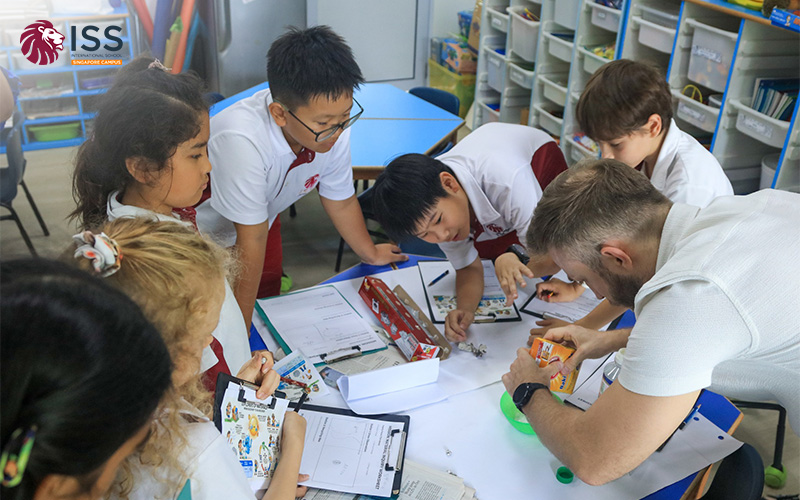
The IB learner profile sits at the heart of the IB continuum, shaping how students approach learning, build relationships, make decisions, and understand their place in the world. As children grow, attributes such as curiosity, reflection, open-mindedness, balance, and principled action become part of how they learn and live each day.
At ISS International School, we help students grow through a supportive learning environment shaped by our close-knit community, inclusive culture, and personalised approach to learning. As a leading international school in Singapore, we nurture learners who are curious, compassionate, and ready to make a difference.
Speak with our admissions team to explore the right pathway for your child.