Key Takeaways
- Character education helps students develop qualities such as respect, empathy, integrity, confidence, and responsibility alongside academic knowledge.
- Its purpose goes beyond encouraging good behaviour. It helps children understand how their choices affect others and how they can contribute positively to a community.
- At ISS International School, we reinforce these qualities through the International Baccalaureate (IB) continuum, service learning modules, and our inclusive Kampong community.
Introduction
A child’s growth is not only reflected in academic progress. It can also be seen in how they handle setbacks, make decisions, relate to others, and become more confident in expressing themselves.
This is why we make character education a priority at ISS International School. It is the intentional development of ethical, civic, and personal values that help children build positive qualities and make responsible choices. These foundations can shape how students approach learning, relationships, challenges, and greater independence as they grow.
What Are the Core Goals of Character Education?
At its heart, character education is about helping students understand the kind of person they want to become, how their actions affect others, and what it means to contribute responsibly to the wider community.
1. Build Positive Personal Traits
Qualities such as empathy, integrity, resilience, respect, and responsibility influence how children respond to both opportunities and difficulties.
For example, resilience can help a student persist when a task feels challenging, while empathy can help them recognise when a classmate needs support. Integrity encourages students to be honest about their work and choices, even when doing so may be uncomfortable.
These qualities can also make children feel more confident. When children understand their strengths, values, and responsibilities, they can become more secure in expressing themselves and approaching unfamiliar situations.
2. Guide Ethical and Responsible Action
Knowing that respect or honesty matters is only the first step. Children also need opportunities to apply these values when making decisions.
Developing student responsibility means helping students consider consequences, take ownership when something goes wrong, and understand how their choices affect other people. Rather than simply telling students what they should do, we want them to gradually develop the judgement to think through situations for themselves.
3. Support Positive Participation in Society
A child’s character also affects how they participate in communities. Students need to learn how to listen to different viewpoints, communicate respectfully, cooperate with others, and respond constructively when disagreements arise.
In an interconnected world, learning to respect differences while contributing thoughtfully to a shared community is an important part of becoming a responsible global citizen.
How We Weave Character Education Into Learning at ISS International School
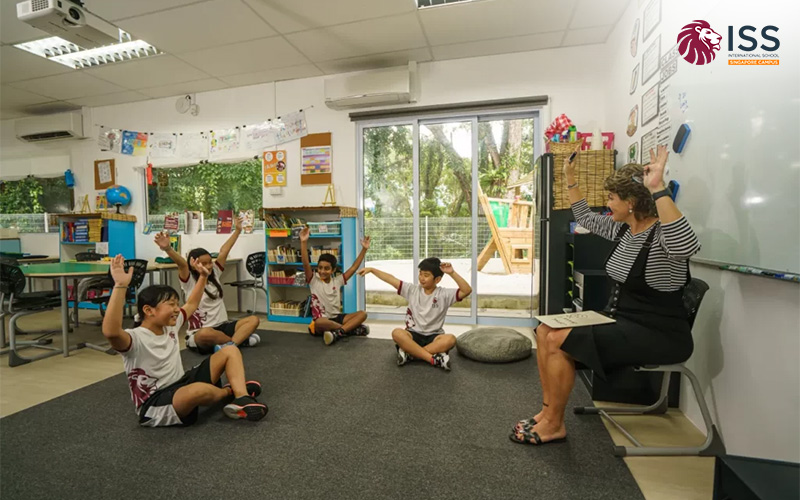
At ISS International School, we do not treat character education as a standalone lesson. Instead, we integrate it into how students learn, collaborate, reflect, and participate in school life.
1. Embed Values Into Everyday Learning
At ISS International School, character development is not separated from academic learning. The IB framework gives students regular opportunities to practise qualities such as respect, open-mindedness, integrity, and responsibility through the way they learn and work with others.
Within the IB Primary Years Programme (PYP), for example, students learn through units of inquiry that encourage them to ask questions, investigate topics, and consider different perspectives. A group inquiry may require students to listen to different ideas, divide responsibilities fairly, explain their thinking, and reconsider their views when they encounter new information.
In this way, qualities such as cooperation, respect, and reflection become part of the learning process rather than standalone lessons.
2. Create Opportunities to Turn Values Into Action
Values become more meaningful when students have opportunities to apply them in real situations. At ISS International School, service learning helps students connect what they learn in the classroom with the needs of communities around them.
Within the Service as Action module under the IB Middle Years Programme (MYP), students have to research an issue, plan an appropriate response, take action, and reflect on what they have learned from the experience. Some activities are also linked directly to curriculum units, allowing students to see how their knowledge and skills can be used to address real social or environmental issues.
As students progress into the IB Diploma Programme (IBDP), Creativity, Activity, Service (CAS) gives them greater scope to take initiative and pursue causes or activities that matter to them. Through CAS, our students have worked with local organisations, supported children with reading and mathematics, participated in animal welfare initiatives, and contributed to projects serving communities in the region.
These experiences can help students develop a stronger sense of empathy, social responsibility, and awareness of the role they can play within a wider community.
3. Build Character Through Belonging and Inclusivity
Children are more likely to participate, form positive relationships, and grow in confidence when they feel that they belong.
Our Kampong Spirit helps create this sense of community. Each student is part of a ‘Kampong’, giving them a familiar group where they can build stronger connections with peers and teachers, share experiences, and contribute to school life. This smaller community helps reinforce values such as respect, empathy, cooperation, and responsibility through everyday interactions.
Our international community adds another important dimension. For local students, they can learn alongside peers from different cultures, languages, and backgrounds, giving them opportunities to understand different perspectives and communicate with greater sensitivity. At the same time, international students can feel more supported as they adjust to a new country, school, or community.
Conclusion
Academic knowledge remains an important part of education, but the students of today will also need the confidence, judgement, and values to apply what they learn thoughtfully.
At ISS International School, our small class sizes, complete IB learning journey, and close-knit international community give students regular opportunities to be known as individuals, take increasing ownership of their learning, and engage with different perspectives. Together, these experiences support our aim of developing independent thinkers who act responsibly and contribute meaningfully to the communities around them.
Looking for an international school where academic learning and character education go hand in hand? Contact us to learn more about our programmes or arrange a school visit.